

'But how come you don't look like a motorcyclist?' and 'What scooter do you ride?' These are two of the most common questions non-riders (and even some riders) ask when, not usually 'if' anymore, I mention that I ride a 'motorbike.' Americans nearly always pose the first question. The second is what Italians ask me.
La Dolce Vita … the sweet life …
For Schenectady, New York-based historian, scholar, professor and author Wendy Pojmann, that blend of indulgence, culture, and simple joy – popularized by the 1960 Federico Fellini film – is fostered by the pursuit of knowledge and experience.
Whether it’s a convo with an Italian barista on the merits of espresso, learning about immigrant work culture in a foreign country, or negotiating twisties on a two-wheel Duc steed … home and abroad, Pojmann has put her proverbial pen to paper to record that ‘good’ life.
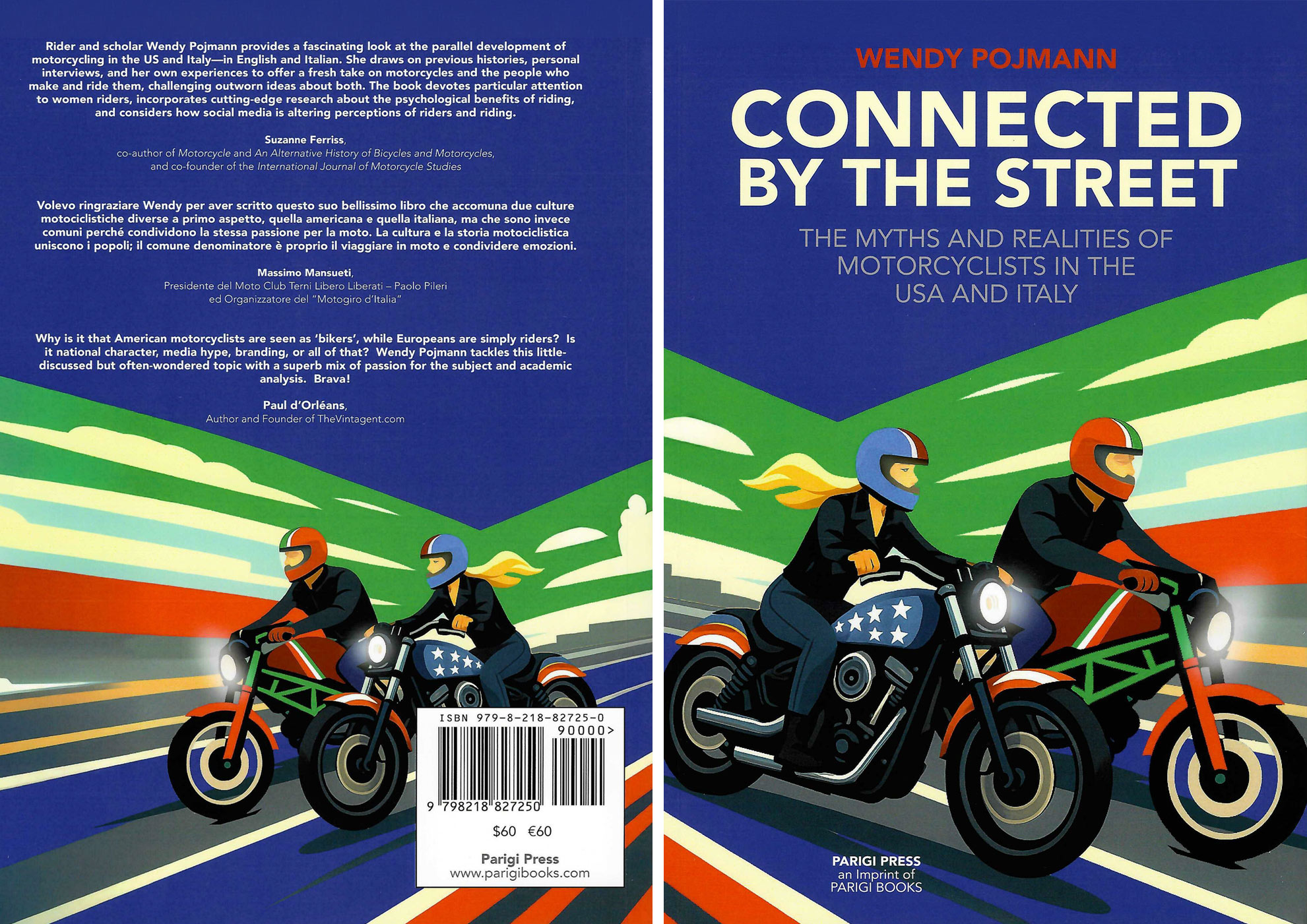
“When I can connect my personal experiences to academic research and communicate my thoughts to a more general audience, I find writing especially fun,” she says, adding her enthusiasm for all things moto pushed her to produce her latest published offering: Connected by the Street: The Myths and Realities of Motorcyclists in the USA and Italy (Parigi Press: $60).
“I started thinking about the various motorcycle coffee shops that seemed to be popping up all over around 2019-2020. I had been in touch with Paul d’Orleans, (and was) asked if I wanted to write something for The Vintagent, connecting those interests.”
Pojmann, who started riding close to 14 years ago, wrote several short pieces for the moto history and culture website, before embarking on her own, more comprehensive project.
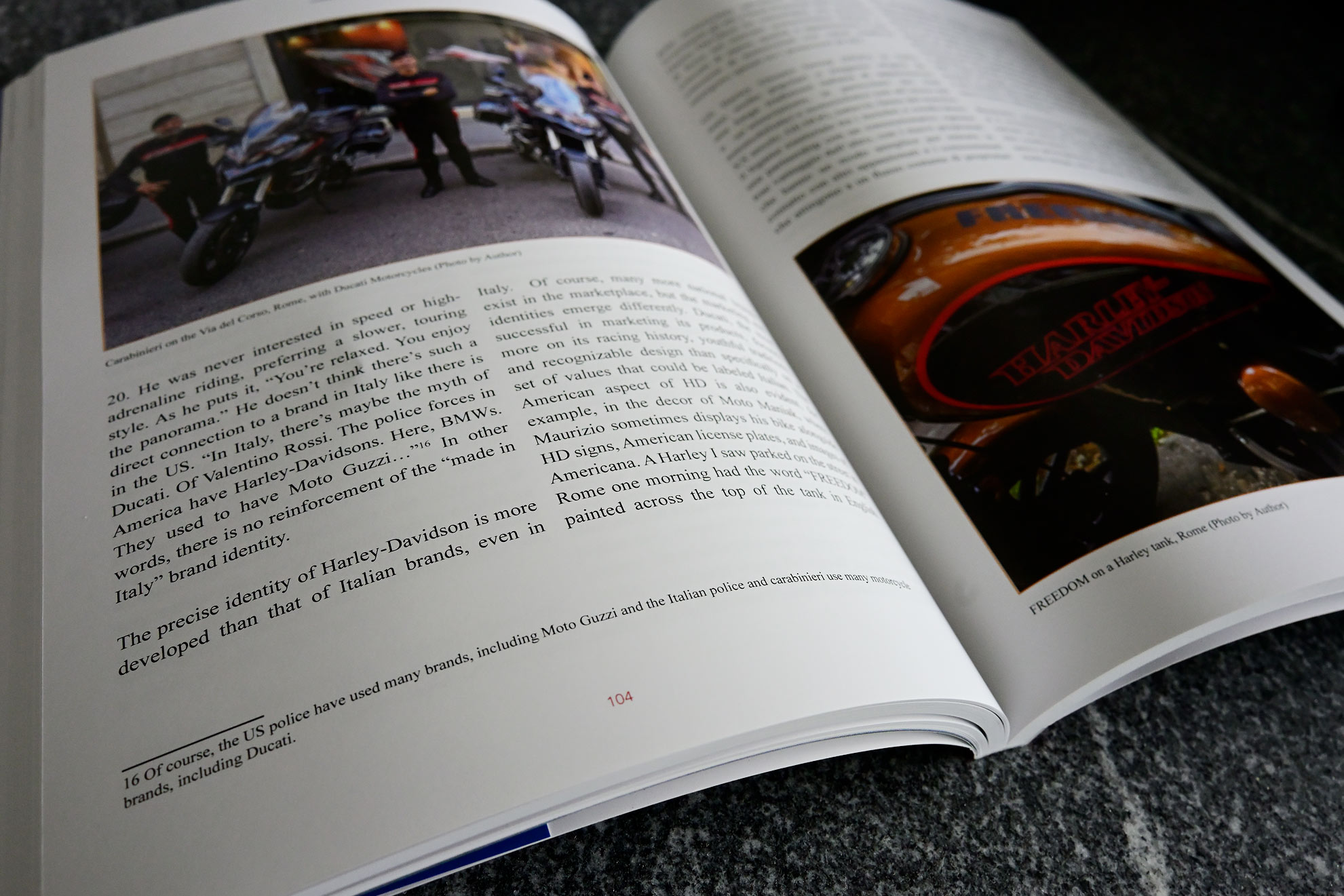
Connected by the Street is presented as a bilingual offering -- English and Italian share adjoining page space, along with rarely seen photos from both sides of the Atlantic. — Wendy Pojmann
Unique riding cultures relate to respected cultural traditions. The American myths of the lone rider seeking solitude and the biker gang member loyal to his club to the death continue to thrive in the US and take special forms in Italy.
CONNECTING COMMUNITIES
In the nutshell, Connected by the Street, explores the contrast between riding culture in the US, where motorcycling is more often than not seen as a rebellious side activity, and Italy/Europe, where the motorcycle is considered a viable commuter option … where the licensing process is more intense and staggered (level wise), and where government supports motorcyclists with such things as legal lane splitting and dedicated parking. It compares the origins of riding on both sides of the Atlantic, and what the concept of ‘community’ means.
“I knew I wanted to write something in-depth about motorcycles … focus(ing) on themes that emerged from my experiences. So, I started responding in my own head to the questions Americans and Italians ask me about riding. That led to all the ‘how’ and ‘why’ questions that are part of my historian's way of thinking. I started making outlines and filling in my understanding of certain ideas through research. Once I had all that in place, the writing came easily.“
Pojmann – who teaches a variety of history courses at Siena University in Albany, NY – devoted three years to the project, aided in part by a one-semester sabbatical from the classroom. She has a Ph.D., earned at Boston College, in modern European history, with an emphasis on Italian and women’s history.
The book is noteworthy for having text in both English and Italian, side by side, and for its array of historical black-and-white and color photos of riders Stateside and in Il Bel Paese … The Beautiful Country.
Both of Pojmann’s must-have features led her to publish the book through her husband Andrea Parigi’s company bookstore, which specializes in antiquarian and collectible books, as well as Italian-language titles.
Parigi helped with the translations, and the overall text went through peer review, with Pojmann maintaining complete editorial control, something not possible through her usual academic press contacts.
“There were some motorcycle terms that required extra research to translate. For instance, in the US, we talk about ‘squids’ and refer to passengers as ‘backpacks.’ Italians don’t really use those words, so I had to look more into how to explain them.”
“I (also) thought about images (a great deal) and conducted archival research to collect photos and materials that hadn’t appeared in other motorcycle publications; I wanted to include images people hadn’t seen before.”
"There were some areas I considered developing further, such as recent trends, but at some point, you have to stop. I saved some ideas for other projects."
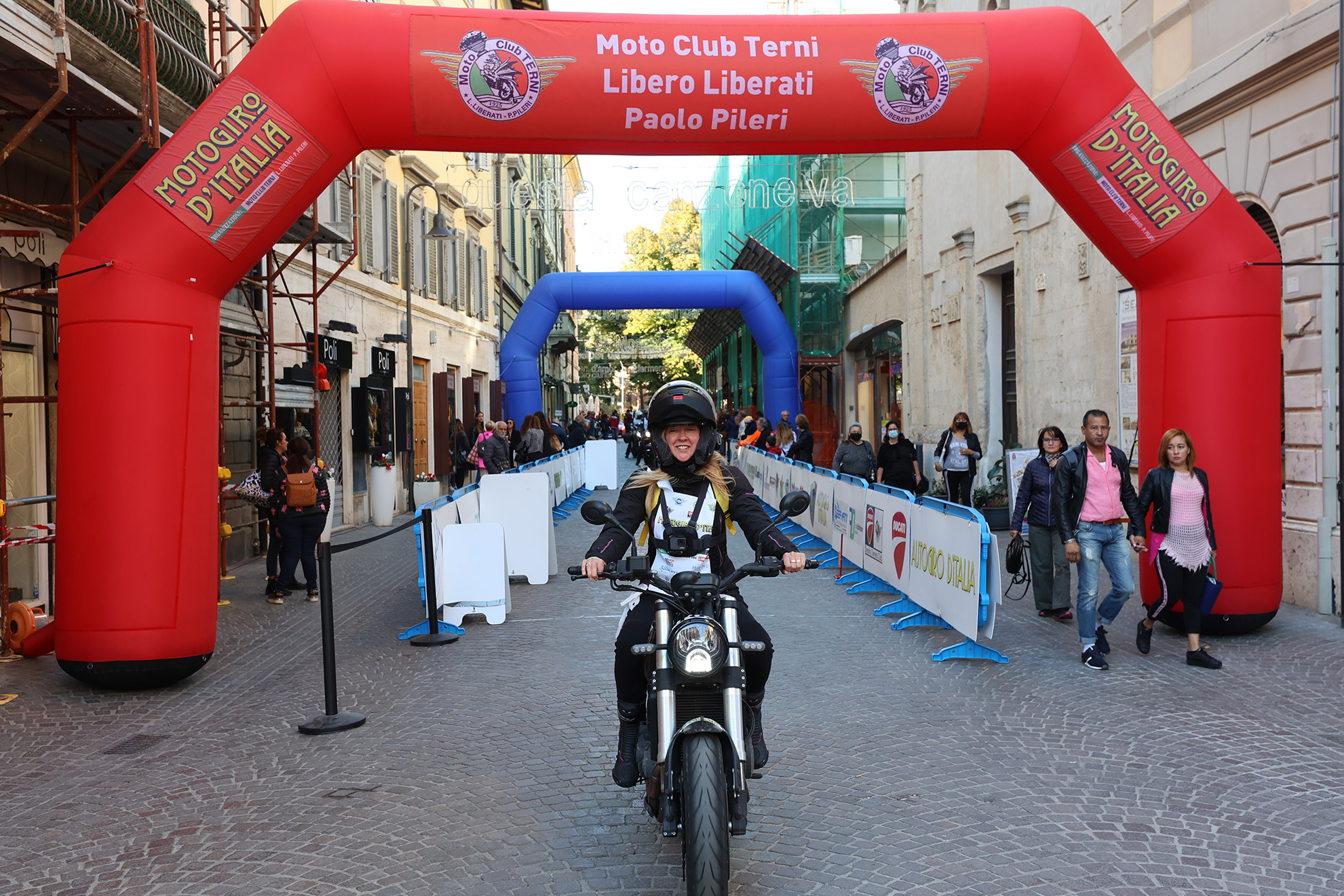
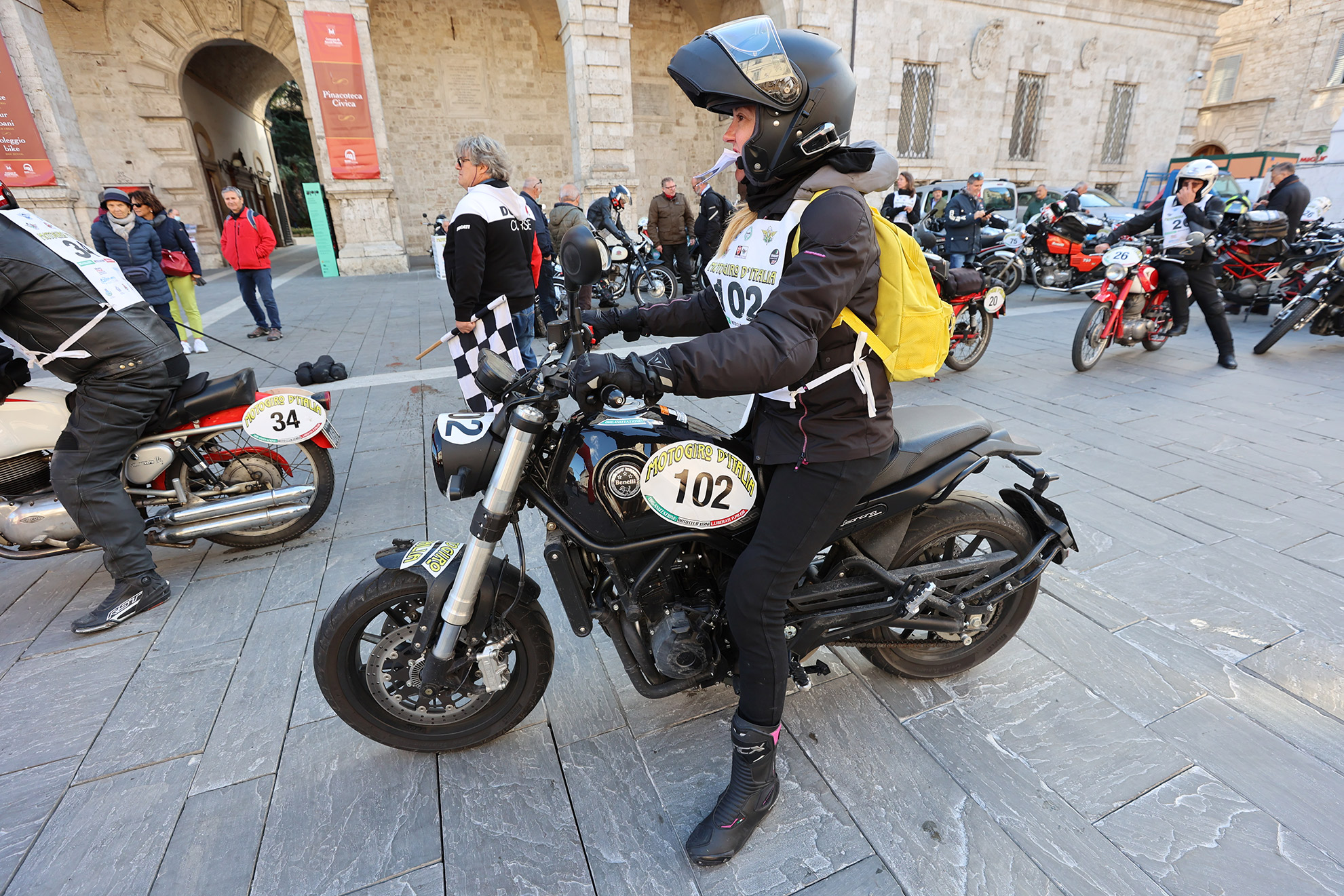
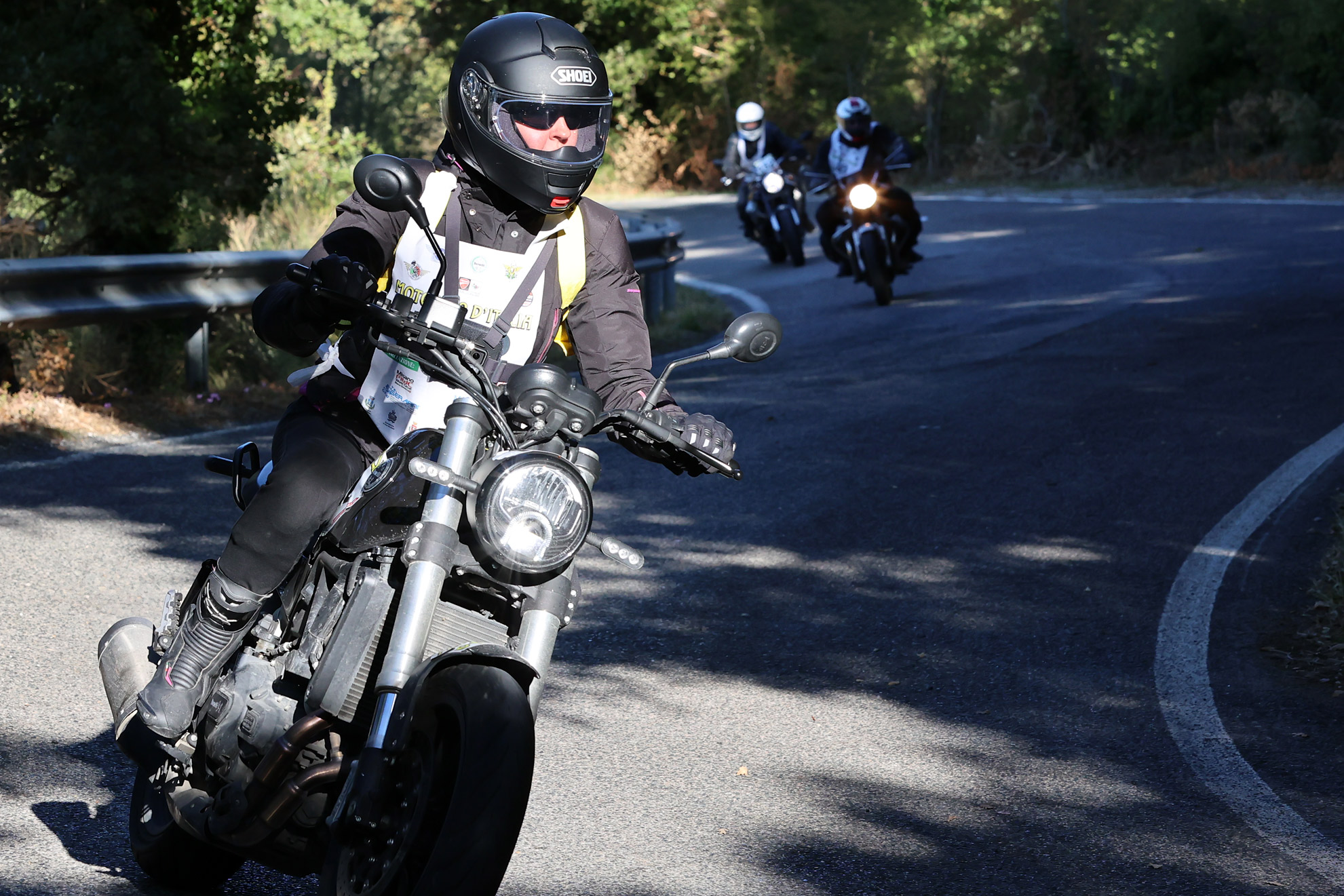
After writing an article about the history of the Motogiro d’Italia for The Vintagent, organizers invited Pojmann to participate. On each of the six riding days, participants had to complete skills tests at the beginning, middle, and end of the day and reach the checkpoints within the given time limits. Sometimes that meant there was barely time to stop for gas or an espresso. "The roads were also challenging, and I was on a motorcycle that was not my own, a newer Benelli Leoncino, which they gave me to ride in the Motogiro class for newer bikes," she said. — Domenico Vallorini
Most Americans who don't ride immediately turn to the 'discourse of danger,' as I call it. They ask, 'Aren't you afraid of getting hurt?' or share a story of someone they know or know of who was killed or seriously injured in a motorcycle accident. ... I usually say, 'Sure there are risks, but caution, classes and good gear help reduce them.'
WHEN IN ROME …
Born in Utah, Pojmann was the daughter of a career Army officer, which saw her living on the East Coast and the Midwest here in the US, as well as Germany and Italy.
“I lived in Rome during my college study abroad year, then again while finishing my Ph.D., and stayed for another four years. I go back to see family and for work, usually a couple of times a year.”
Pojmann’s Italian experience – even her husband is an Azzurri – has given her some in-depth, firsthand knowledge on the state of motorcycling there.
“In Italy, I hardly know anyone who has never been on a motorcycle or scooter. Motorbikes are everywhere and part of everyday life,” she says, adding in general she thinks Italians are better riders.
“I do think that has to do with tougher licensing requirements and working your way up from smaller-displacement bikes. When I took the MSF course in New York, I was surprised by how many people in my class had already bought a liter bike or a bigger one without even having a license. And when we were done with the course, we could basically ride a small motorcycle in a parking lot. I mean, then you get out there on the road, and you have no experience. In Italy, the roads in both urban and rural areas require your full attention. Teens start on 50cc scooters, and a 500cc motorcycle is considered a pretty big bike.“
Italian traffic seems chaotic, but somewhat like in California, car drivers are used to having motorbikes very close to them, she adds.
“Not only is there lane-splitting, but scooters and motorcycles work their way to the front of cars at stoplights and start together ahead of them. People can better understand the size of their vehicles and can accurately judge speed. In traffic, I definitely feel more comfortable in Italy, but in the US, especially where I live in New York, I like that I can be on great roads with basically no cars in less than 10 minutes.”
Pojmann says the moped and scooter market is much larger in Italy than in the US, but that Italians also love traditional motorcycles.
“Emissions controls are much stricter in Italy, and older machines are not grandfathered in. For instance, we keep a 2013 Ducati Hyperstrada in Rome that is Euro 3 compliant. The current standard is Euro 5. If the law stays the same, we’ll have to either sell it to someone in a smaller town in Italy, where the standards are different, or bring it to the US by 2028.”
In New York, Pojmann’s husband rides a two-stroke 1975 Honda Elsinore, dubbed ‘Little Smokey’, without any regulatory issues.
“That said, there is a vintage market in Italy, as well, but you have to register your motorbike as a historic vehicle and use it only for designated purposes, such as special rallies or events like the Motogiro or Milano-Taranto.”
Motorcycle safety is “perplexing” in both countries, she says, running the gambit from ATGATT … all the gear all the time … to helmetless rebellion.
“In Italy, helmets are universally required, and clothing labeled for motorbikes must have EU-rated armor. Generally, in cities, I see motorcyclists wearing helmets and motorcycle jackets, but not necessarily other gear. The jackets come off when it’s hot. If, however, they are doing a weekend ride, you’ll often see riders in full racing leathers. Of course, the irony is that urban riding is more dangerous. Italians do take courses and go on track days but perhaps rely more on the graduated system and experience on the road.”
In the US, Pojmann says she is still shocked by how many states don’t require helmets and finds it troubling that the AMA doesn’t lobby for a federal helmet law.
“I hear a lot of motorcyclists in the US saying they don’t want to feel restricted, or others who want to show off skin on social media. I admit I am strictly ATGATT in the US, but I occasionally ride in street clothes in Rome. My justification? I don’t know. When in Rome?”
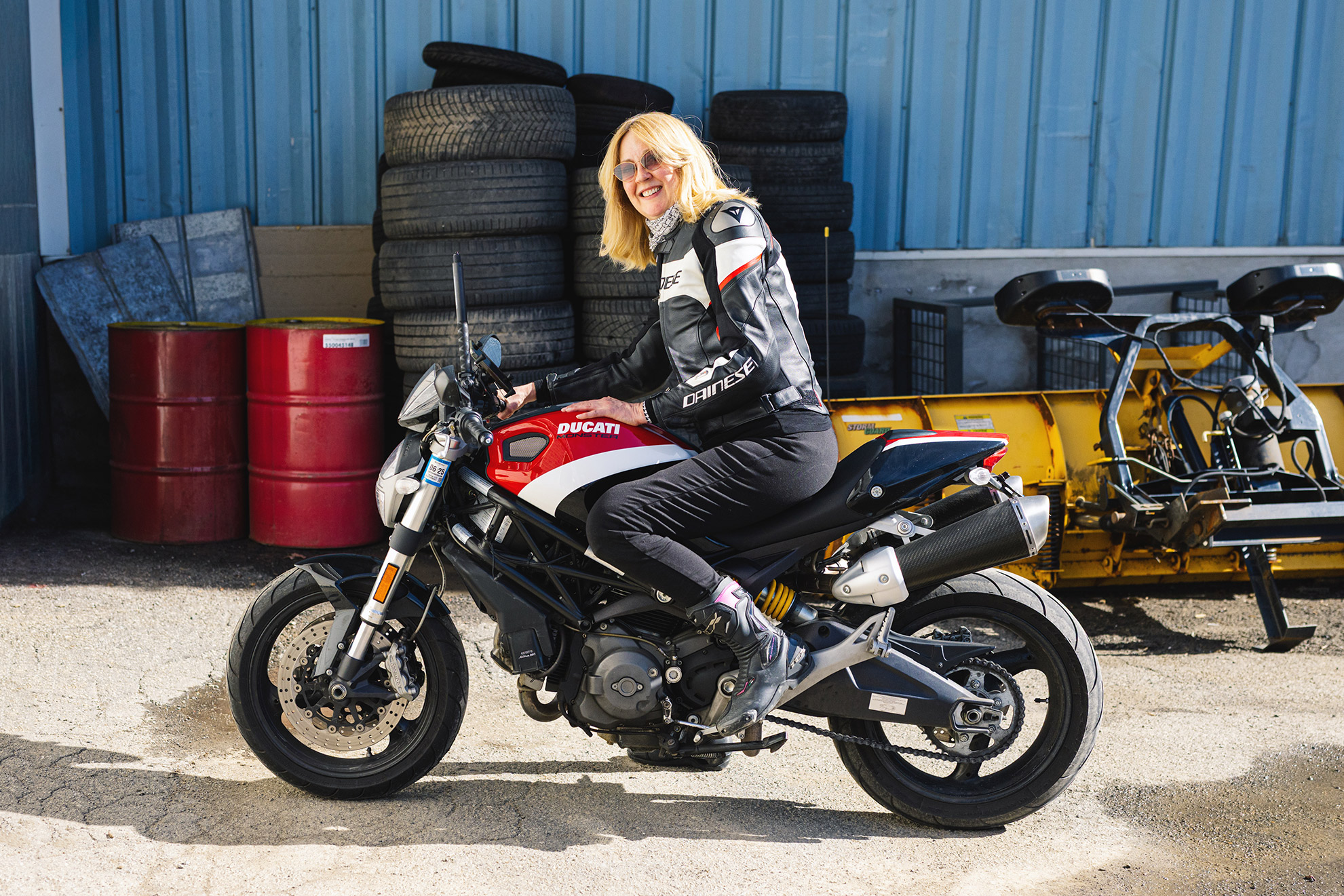
Wendy Pojmann goes full Italian in a Dainese jacket, on a Ducati Monster. — Lindsay Comer
Recently, (my Mom) joined the 'cool kids' in her over-55 subdivision with a Ducati Streetfighter 848 in the garage - mine. I couldn't have imagined that as a 17-year-old high school student in Iowa ... She read my entire manuscript draft and offered suggestions to make aspects of my work more accessible to people like her, that is people who grew up with the biker stereotypes and didn't think women like me ride motorcycles. She still worries about our safety but has dealt with it by buying us airbag jackets.
FROM PILLION TO ROADMASTER
Pojmann, initially never thought about riding her own motorcycle.
“One day on a ride with my husband in the Adirondacks, I was kind of bored and fell asleep on the back. I didn’t know if I was still into it. Then, when dancers in my ballet class showed up on bikes, it finally hit me that I could ride, too.”
Pojmann passed the MSF course and found her treasured 1974 Honda CL 200, Little Blue, with help from her husband.
“It’s way more fun for us now that we both ride. My husband jokes that when only he was riding, we had one bike. Now we need more than two hands to count them all. It’s a good problem.”
“My current ride is whatever I'm riding at the moment, or, as my riding buddy Art would say, ‘depending on the day of the week’. Seriously, though, I suffer from multiple motorcycle disease. My current ‘go-to’ bikes are a Ducati Scrambler Desert Sled, because it’s tall, and comfortable, and handles rough roads well, and a Ducati Streetfighter 848, which is insanely exciting to ride and my most recent acquisition. But there are others–all bought used.”
In true Italian fashion, Pojmann commutes to Siena University whenever the weather is decent, choosing a nice route along the Mohawk River.
“I am still working on getting designated motorcycle parking on campus; it’s been approved but not marked out yet. I keep a skirt and a pair of flats in a filing cabinet, so I don’t have to carry too much extra stuff on my bikes.”
The notion that women’s interest in riding has been a more recent occurrence is one of the myths Pojmann dispels in Connected by the Street.
“Women have always ridden motorbikes in both countries. I try to emphasize this in the book by discussing women motorcyclists alongside men from the early 1900s to the present. I would even argue that there was a kind of acceptance of women riders in the US before World War II that later morphed as attitudes about gender changed in the immediate postwar period. After that, there is a certain notion of exceptionality, and riding is seen as unfeminine.“
Italian women always rode, too, but got a boost after WWII with the spread of scooters and small-displacement motorcycles, she adds.
“There is sometimes a ‘gendering’ of the scooter, but it’s not at all weird to say you ride a motorcycle if you are a woman. I smile when I see a sexy Italian woman on her way to work on a Moto Guzzi wearing inappropriate footwear.“
Pojmann has favorite rides on both sides of the Atlantic.
Italy has phenomenal riding from hills to serious mountain passes to the coastline, she says.
“When we went to the Moto Guzzi Open House in 2024, I loved riding along Lake Como and over a pass the rental agency recommended called the Passo di Agueglio. The views were spectacular, and I perfected my hairpins and switchbacks that day. The Stelvio was a little too far to make it there and back in one afternoon, but there are many similar passes with less traffic.”
The US also has its gems: “There are so many great places to ride in upstate New York. I guess one of my favorite things to do is just run out for a 90-minute loop close to home that takes us on twisty roads, to scenic lakes, and to a good coffee shop. It’s nice to be able to step away from the computer and reset that way.”
Pojmann also had the opportunity to ride in New Mexico during a tough time for her family.
“It’s a beautiful state, and it was awesome to just ride to the edge of a subdivision and then take dirt trails through the desert. There’s so much open land without restrictions.”
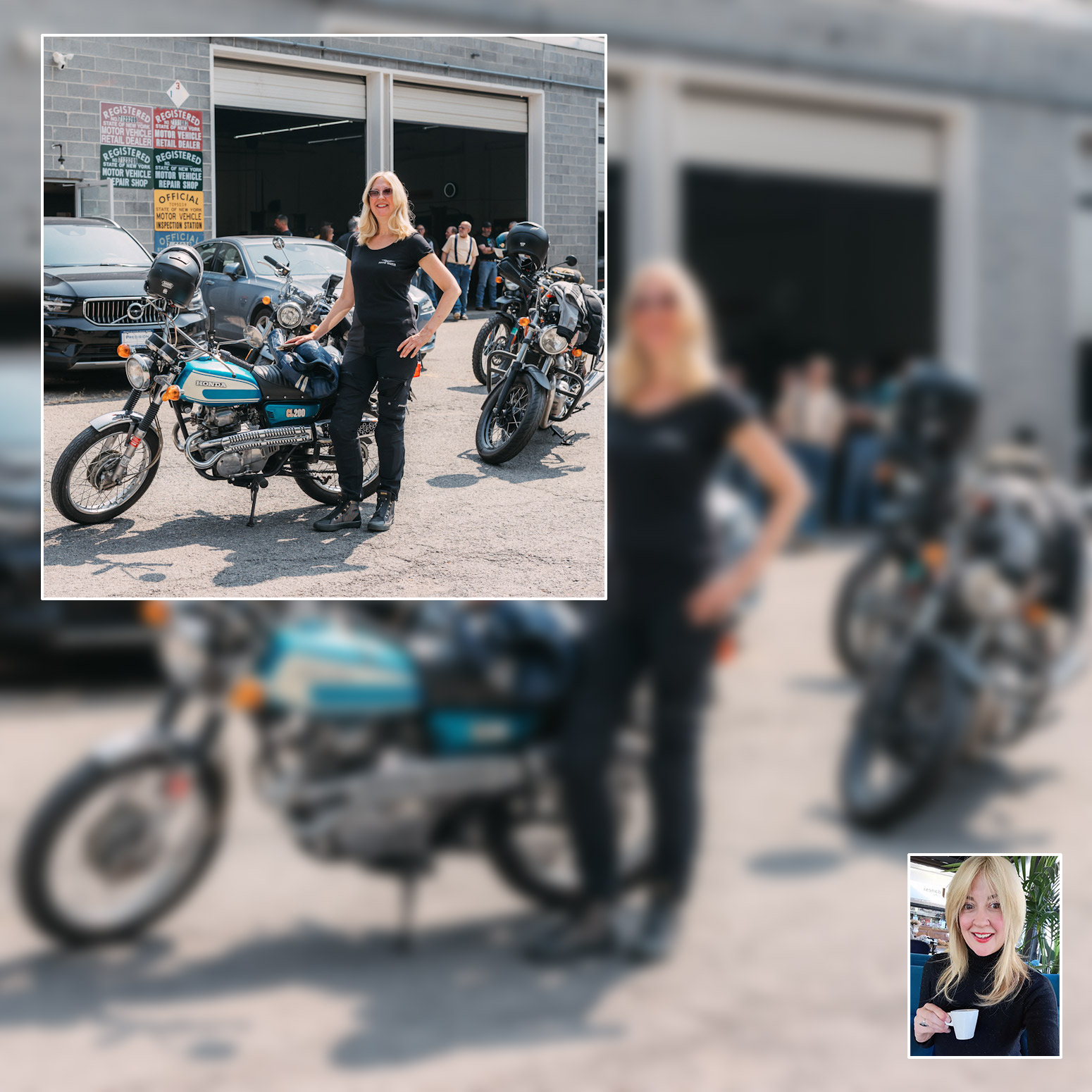
Wendy Pojmann with her treasured 1974 Honda CL 200, dubbed Little Blue. And with an all important espresso (inset) — Lindsay Comer
As one of my interviewees, an Italian osteopath named Miriam Orlandi, who has taken numerous long-distance motorcycle trips, put it: 'When you're out on a motorcycle, one person can be a doctor and one a mechanic ... The motor joins them and no one is more important than anyone else.'
MOTO COMMUNITY & THE FUTURE ON TWO WHEELS
In the US, cities like LA and NYC have a large moto community component … organized events, rides, shows and common garage spaces. In Italy, there are similar communities, but less of a need to create shared spaces as so many people ride, Pojmann says.
“There are many Moto meetups and other events in Italy, like here. Gear shops and dealerships hold them. HOGs and Ducati clubs, as in the US, are tied to dealerships. There are also, however, numerous Moto Clubs that date back to the early 20th century. These tend to be organized more like cultural associations than biker gangs. There’s no hierarchy or initiation phase; you just pay an annual membership fee and join them.”
“They do form, sometimes around specific brands like Vespa or Moto Morini clubs, but in Rome and other cities, there’s less acknowledgement of being a motorcyclist through signs like the two-finger down salute. In the countryside, riders kick a leg out to greet each other and maybe chat at an espresso bar along the route, but maybe less often than in the US.”
The motorcycle industry, as a whole, is in flux in both countries, with new riders preferring lower cost, smaller electric alternatives.
“I go into some of this in the book, but of course, the numbers for 2025 are coming out,” Pojmann says. “There are fewer young people in the US and Italy who are interested in driving cars, for sure, but motorcycles are still a less expensive option. I think younger Americans sometimes react to what I refer to in the book as the ‘discourse of danger’ that permeates the news media and broader culture, scaring them away from riding. As an educator, I hear a lot about anxiety among young people these days. And yes, as I discuss in the book, Harley-Davidson and Indian have been struggling for years for many reasons, including high costs and the meaning of national identity.”
Younger Italians are still riding scooters and smaller motorcycles, but unfortunately, many are now on electric kick scooters, the monopattini, which are disruptive on both streets and sidewalks, she adds.
“For more mature riders, premium brands such as Harley-Davidson and Ducati are status symbols, but there are also numerous lower-cost options. Chinese brands like Zontes are gaining market share, and historic Italian brands such as Moto Morini and Benelli are now Chinese owned, with design and engineering still done in Italy. That, too, brings down the price point. The most recent figures I’ve seen suggest that large-displacement scooters are the fastest growing in the two-wheel segment, and that ADV bikes are still the most popular motorcycles, with the BMW GS back in first place after falling for a few years. I don’t see much enthusiasm for electric motorbikes.”
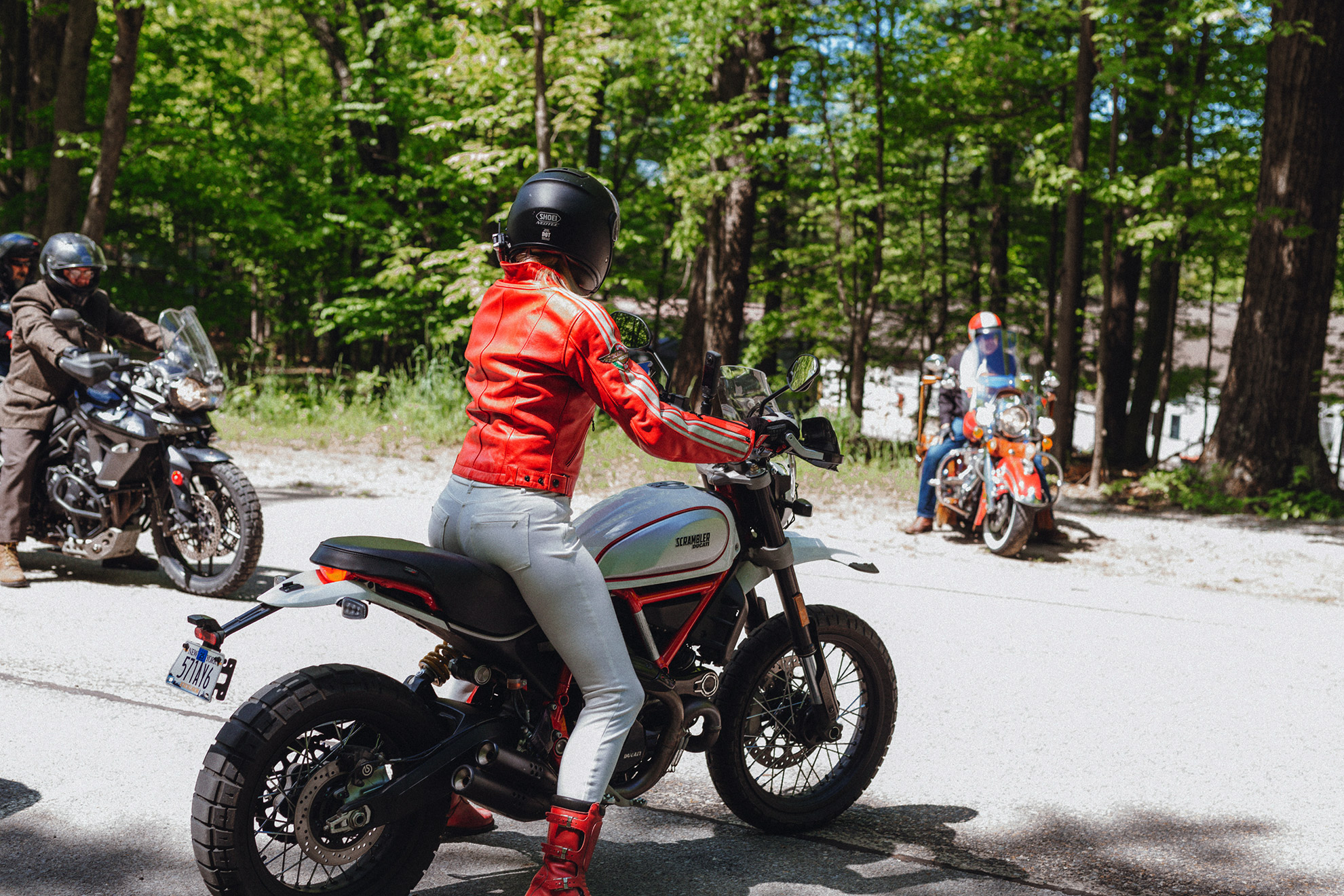
Wendy Pojmann rides her Ducati Scrambler in the Saratoga Springs, New York Distinguished Gentleman's Ride in May 2024. — Lindsay Comer
Every day thousands of motorcyclists make decisions about whether or what kind of gear to wear. Some of them seek ways to improve their skills or choose other riding companions who share their riding style. They build subcultures based on these preferences. But they also reach across them to help each other out. Whether through charitable work, or just by stopping to ask if a rider on the side of the road needs help, motorcyclists build communities and break down barriers.
ON THE HORIZON
Looking to the future, Pojmann says there may be several more moto-related books in the offing, on subjects that didn’t make the editorial cut for Connected by the Street.
“If this title sells well, we might even consider publishing more motorcycle titles, including by other authors (through Parigi Books). There’s a bit of a gap in that marketplace right now.”
More immediately, Pojmann is scheduled to give book-related talks at the 2026 Motodays trade fair in Rome, Italy (March 6 - 8) and Americade in Lake George, New York (May 27 – 30).
Look for her during International Female Ride Day, May 2, at the monthly Capital Region Ducati Official Club rides – during the summer and fall, and the Distinguished Gentleman’s Ride May 17.
“I always try to ride in the DGR since it’s such a great cause and brings good press to motorcyclists.”
Pojmann is presenting new work at the International Journal of Motorcycle Studies conference in Washington State in mid-July and is writing a roundtable piece with other IJMS authors on wellness and riding, aka ‘throttle therapy,’ based on the research she started for her book.
A busy year so far, “but, I’m certainly open to invitations,“ she says.
THE BOOK
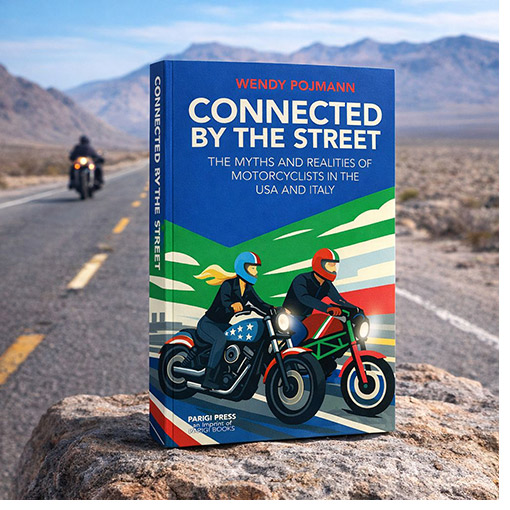
Wendy Pojmann's Connected by the Street: The Myths and Realities of Motorcyclists in the USA and Italy (Parigi Press: $60) is available for purchase online at Pargi Books: Get Your Copy.
204pp. Pictorial wrappers with French flaps. Profusely illustrated with rarely seen color and black-and-white pictures. Text in English and Italian.
Connected by the Street: The Myths and Realities of Motorcyclists in the USA and Italy is more than a book about motorcycles — it’s a cultural history that challenges stereotypes and reveals what riding really means on both sides of the Atlantic. Born out of the author’s personal encounters with the surprised reactions of Americans and Italians when she says she rides, this study goes beyond memoir. It traces more than a century of motorcycling, uncovering how myths of danger, freedom, and rebellion have shaped public perceptions and how motorcyclists themselves define their community. From the shared beginnings of the American and Italian motorcycle industries to their sharp divergence after World War II, the book explores the riders, the roads, and the machines that carry different meanings in each culture. It debunks the outlaw myth, examines the role of safety debates, and highlights how motorcycling is embraced in the US and Italy as lifestyle, identity, and tourism. In the digital age, where riders narrate their journeys on social media and inspire global audiences, motorcycling is more than a pastime — it’s a cultural force. This book reveals how history, myth, and everyday experience intertwine to keep the motorcycle at the center of stories about risk, freedom, and belonging.
Luca Baldi
An interesting read on the differences and unlikely similarities between riding in the States and overseas in Italy ... highly recommended. ⭐⭐⭐⭐⭐
I'm happy to have found NYC Motorcyclist and to see we share perspectives on the positive aspects of the motorcycle community. Hope to connect in person in the future.